
SOURCE: sleazeroxx.com
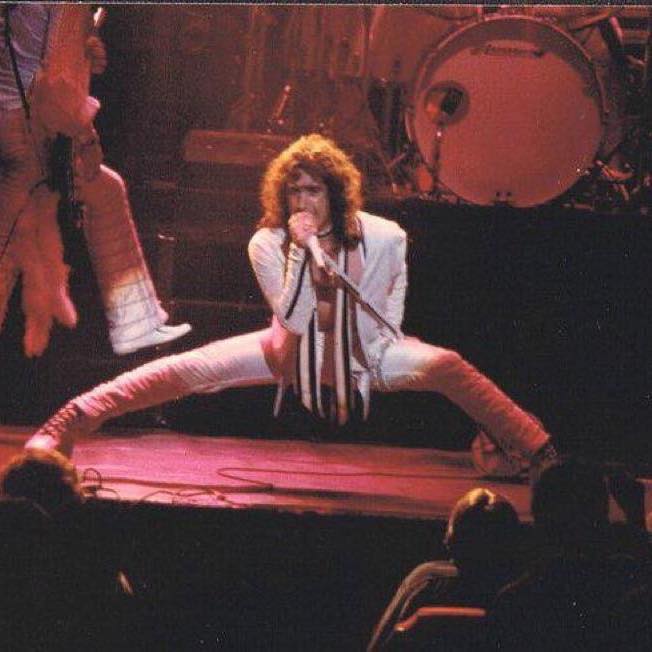
Angel‘s long-time frontman Frank DiMino was recently interviewed by Marko Syrjala for Metal-Rules.
DiMino was asked about KISS bassist Gene Simmons‘ role with Angel back in their early days to which he replied:
“By the time Gene Simmons came down, we had already signed a management deal and were ready to go to Los Angeles. What happened was that Gordon Fletcher, who was a writer for Circus Magazine and Rolling Stone and did a lot of album reviews, came down to see us. Gordon was from D.C., so he knew all of us. The more we played, the more he would come down, and he kept coming to our shows and talking to us afterward. One night, he said, “You know, I do a lot of reviews for bands that play at Largo,” which was the big venue back then.
He added, “Now, I’m going to try and bring a couple of international bands down to see you guys.” So we said, “Yeah, sure.” You know, we were young and thinking, “Yeah, sure, he’s going to bring some bands down, whatever.” One night we played, and we saw some guys come walking in — Gordon was there too. After the show, Gordon brought them upstairs to the green room, where Gene, Paul, Ace, and Peter were waiting. We started talking, mostly with Gene, because Gene loves to talk, especially about business stuff. That’s how we started talking, and that’s when Gene asked if he could get us to sign with Aucoin Management. Unfortunately — or fortunately, depending on how you look at it — we had just signed with David Joseph of the Toby Organization, so we told him that. He said, “Well, okay… but we’ll keep you in mind. We’ll stay in touch.” And we did — we stayed in touch.
When we got to Los Angeles, our manager, David, said, “Well, if you know the guys in KISS… let me talk to Neil Bogart.” Of course, Neil was running Casablanca at the time and was looking for bands. We brought our sound to Neil and talked with him. Neil spoke with David and said, “I’ll sign the band.” David asked, “Well, don’t you want to see them?” and Neil said, “I’ll sign the band sight unseen.” We had a lot of people come down to see us — Ahmet Ertegun, Nesuhi Ertegun, and many others. David had also brought many people to check out the band.
But we were going to sign with Capitol. Even after we had spoken with Neil, we were planning to sign with Capitol because John Carter and Rupert Perry from Capitol had seen the band and wanted to sign us. But as all this was happening, David said, “I’m putting you guys in the studio,” because we were rehearsing every day. We never stopped — we just kept writing and rehearsing through all of this. So when we got to L.A., we went straight into the studio. We had a house we all shared at the time, and we also went straight into a rehearsal studio while all this was going on. We finished the album and brought it to John and Rupert. John listened to it and said, “Oh, it’s great.” But then he said, “I want you to change this and that,” and he started wanting to change a lot of things. And I thought, “Wait a second — we just finished an album we felt pretty good about, and now he wants to change a lot of it.”
Of course, we had Derek Lawrence and Big Jim Sullivan producing the band. Both of those guys were just great to work with. Between Derek’s ties to Ritchie Blackmore and Deep Purple, and Big Jim Sullivan’s history with Jimmy Page and all the studio work he had done, we felt really good about the album. We walked away from that meeting feeling pretty despondent. David picked up on it and said, “Listen, guys, maybe we should go see Neil one more time. Let’s have a talk with him.” Because everyone had told us, “Don’t go with them.” You have to remember, at that stage, KISS still hadn’t made their big breakthrough. Their third album, Dressed to Kill, had just come out. It was still kind of a floundering label, and it didn’t have any major acts on it yet.”
When Syrjala noted that Casablanca Records didn’t have much money at the time, DiMino indicated: “Well, I mean, the money KISS was making came from touring and their live shows because their performances were so incredible. But the albums weren’t doing that well at the time. So we talked with Neil, and he said, “I really love the band. Do you have anything ready?” We told him, “We have the album finished.” So he stopped everything, called everyone in the company down to his office, ordered food, and set up these big studio monitors. He said, “I want everyone to sit down. Don’t talk until it’s over.” He played the entire album. When it finished, he said, “I love this album. I love you guys. I want you on my label.” And that’s exactly what we wanted to hear — someone who truly supported the music we were making and believed in what we were doing.”
You can read the rest of the interview with Frank DiMino via Metal-Rules‘ website.